
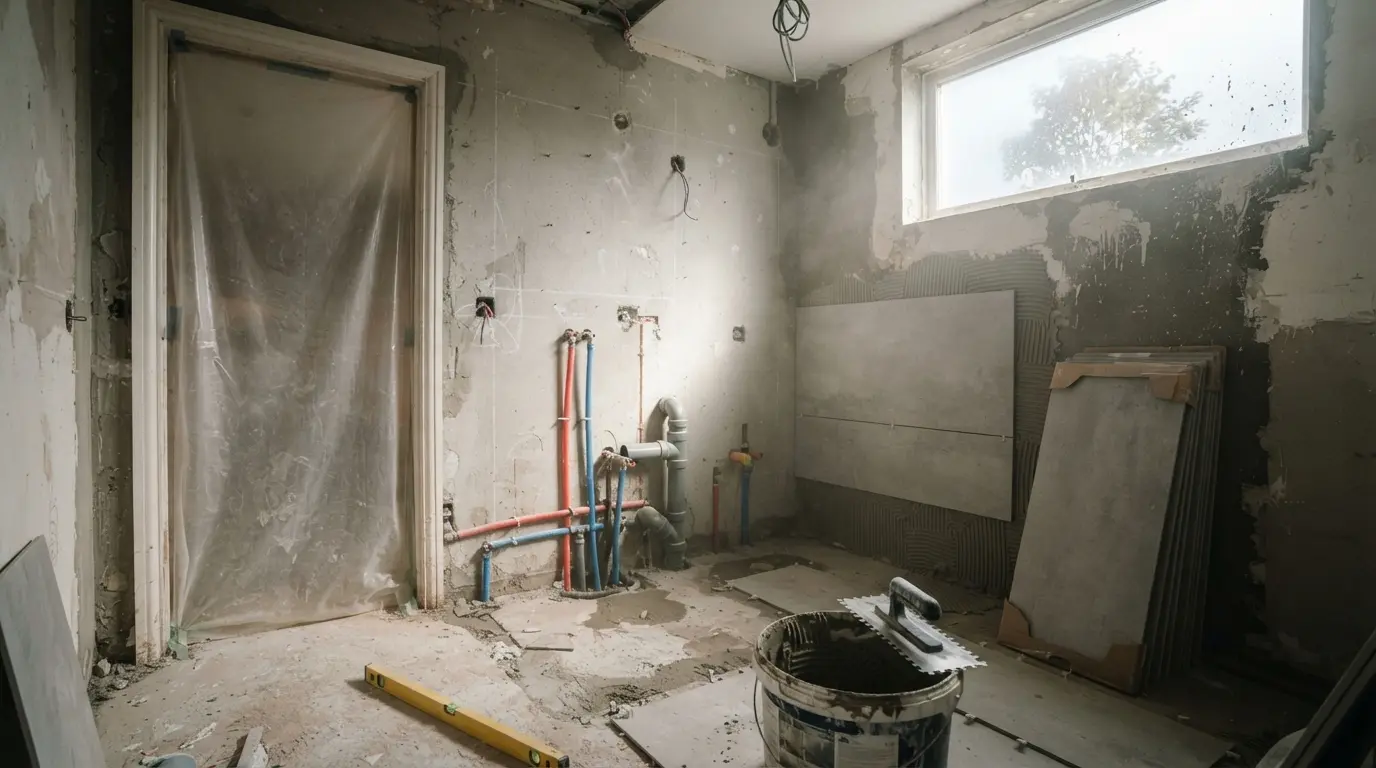
The bathroom is the smallest room in the house and, per square metre, the most demanding. Five or six square metres contain plumbing, electrical work, waterproofing, tiling, sanitaryware and ventilation — six trades that have to be sequenced in a strict order.
That is why two bathrooms of identical size can cost entirely different amounts. Below we explain what the figure depends on, so you know what to ask when you request a quotation.
The four factors that move the price
Whether fittings move position. Relocating a toilet or shower means new chases, changed falls to drainage and usually work in the floor build-up. It is the single largest cost difference between two otherwise identical projects.
The age of the building. In apartments from the 1970s and 1980s we routinely find galvanised pipework, wiring without earthing and drainage stacks that need replacing. These are not options — they are preconditions for the new bathroom to work properly.
Material selection. The range here is enormous. The same tiled area can cost six times more depending on the range chosen, and sanitaryware and taps vary even more widely. This is also where you have the most control.
Access. An upper floor without a lift, the narrow streets of the Old Town, or restricted loading hours all affect working time and the movement of materials.
How the budget divides
On a typical project, the split usually falls roughly as follows:
- Materials (tiles, sanitaryware, vanity unit): around 45–55% of the total
- Trade labour: around 35–45%
- Strip-out, waste removal and consumables: around 10%
That ratio tells you something useful: if your budget is tight, the room to move is mainly in material selection, not in compressing the work itself.
What a proper quotation should contain
Ask for a breakdown by work package rather than a single lump sum. The quotation should show strip-out, plumbing, electrical work, waterproofing, tiling, sanitaryware and decoration as separate lines.
Equally important, it should state explicitly what is not included. Most unpleasant surprises do not come from price increases, but from work the owner assumed was covered.
Where the unexpected costs hide
The bathroom produces more surprises than any other room, because moisture works for years before it becomes visible. The most common findings after strip-out are a degraded substrate from an old leak, corroded pipework behind the masonry, and waterproofing that was either never done or has failed.
A serious quotation names these as a possibility and allows a contingency percentage. It does not discover them halfway through the works.
Why waterproofing is not where you save
It is one of the cheapest stages of the project and the one with the highest cost of failure. If it fails, the damage is not confined to your bathroom — it reaches the floor below, and putting it right means a full second strip-out.
On our projects, waterproofing is inspected and water-tested before the first tile goes on.
How long it takes
A complete bathroom is usually finished in 10 to 15 working days, provided materials have already been delivered. Lead times on sanitaryware and tiles are the most common cause of delay — which is why orders are placed before strip-out begins.
Request an accurate quotation
Every bathroom has its own condition, its own age and its own constraints. After a visit to the property we can give you a quotation broken down by work package, with clear specifications, stated exclusions and a programme.
Contact us to arrange the site visit.